
AI has become one of the biggest talking points in the creative industry. Almost every week, a new tool promises to generate videos faster, edit content automatically or replace parts of the production process.
After more than 12 years working in video editing and around 9 years producing video & content for brands including Samsung, Sony, EA Sports, INEOS, and Indeed to name a few, I’ve spent the past couple of years exploring these tools myself.
Some have genuinely changed the way I work. Others are impressive demonstrations that aren’t quite ready for professional production.
What I’ve learned is this: AI isn’t replacing great producers or storytellers. It’s changing how we work, removing repetitive tasks and giving creative professionals more time to focus on the parts of the job that matter most.
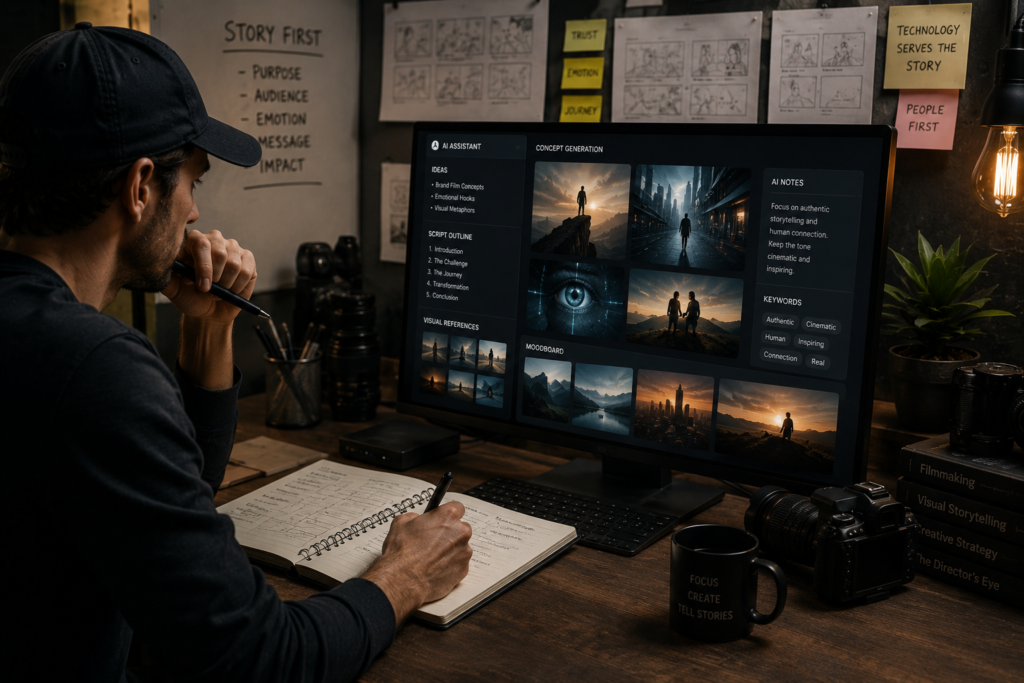
AI is becoming another tool in the Production Toolkit
Not long ago, AI felt like a novelty. Today, it’s becoming a practical part of many creative workflows. New tools are appearing almost weekly, each promising to speed up production, generate content or automate repetitive tasks.
In my experience, the biggest shift isn’t that AI can make videos. It’s that it can remove some of the friction from the production process, allowing producers and editors to spend more time on creative decision-making.
Like any tool, though, its value depends on how it’s used.
Where Ai has genuinely improved my Workflow
When AI first became widely accessible, I was curious but cautious. Like many people in the industry, I wondered whether it was another passing trend or something that would genuinely change the way we work.
After spending time experimenting with tools like ChatGPT, Gemini, Runway, Veo, Adobe Firefly and ElevenLabs, I’ve found that AI is at its most valuable when it supports the creative process, not when it tries to replace it.
Here are some of the ways it has become part of my workflow:
Research and ideation
Whether I’m developing a branded campaign, planning an interview or exploring a creative concept, AI helps me gather ideas, organise information and look at a challenge from different angles. It’s like having a creative assistant available whenever I need one.
Scripting and planning
AI can help draft outlines, refine messaging and structure ideas more efficiently. It speeds up the early stages of development, allowing me to spend more time shaping the story rather than staring at a blank page.
Pre-production
From generating mood boards and storyboards to creating shot lists and production documents, AI helps streamline planning. It doesn’t replace preparation, it simply makes it faster.
Post-production
Editing remains a craft, but AI has made repetitive tasks far less time consuming. Automatic transcription, caption generation, audio enhancement, object removal and localisation all help speed up delivery while allowing me to focus on pacing, emotion and storytelling.
Learning and experimentation
One of AI’s biggest strengths is how quickly it enables experimentation. I can test visual ideas, explore different creative directions and learn new techniques much faster than before.
What AI still can't replace
Despite how quickly AI is evolving, I’ve become even more convinced that the most valuable parts of video production remain deeply human.
Technology can generate content, but it can’t build trust with a client, understand the emotion behind a story or make the countless creative judgements that shape a great production.
As a Producer, much of the job happens away from the edit timeline. It’s about listening carefully during a client briefing, asking the right questions, managing stakeholders, adapting when a shoot doesn’t go to plan and helping contributors feel comfortable on camera.
These are skills developed through experience, communication and empathy not prompts.
The same is true in the edit.
AI can suggest cuts, generate captions or improve audio quality, but it doesn’t understand why a pause should last a little longer, why one interview answer feels more authentic than another or why a particular sequence creates a stronger emotional connection.
Those decisions come from judgement, taste and understanding the audience.
In my view, AI is at its best when it removes repetitive work and gives creative professionals more time to focus on storytelling.
Because that’s what audiences remember.
Not how quickly a video was produced, but how it made them feel.
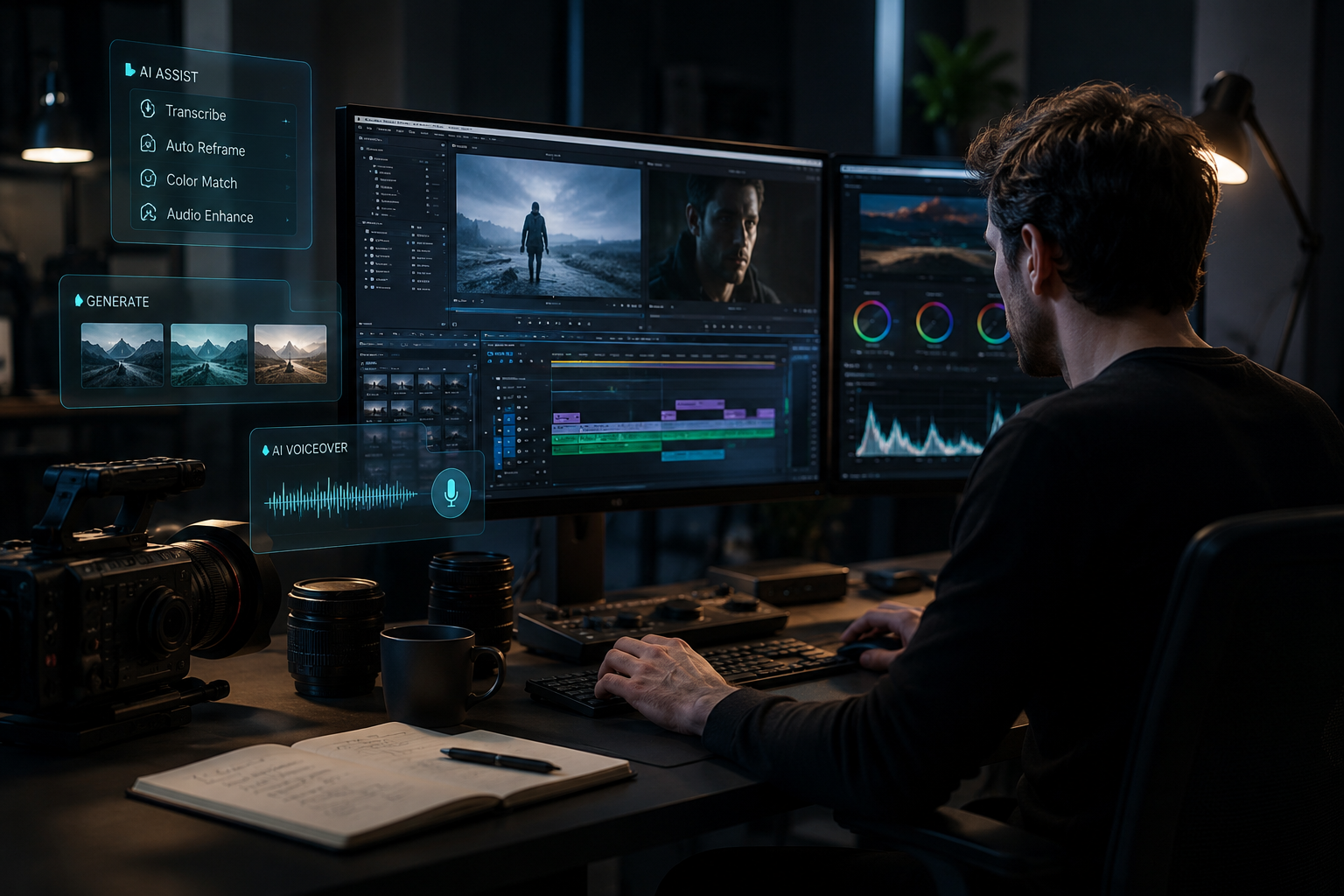
AI is a tool, not a substitute
As powerful as AI has become, I don’t believe it should become the starting point for every creative decision. Like any technology, its value depends on how and when you choose to use it.
For me, AI works best when it removes repetitive tasks, speeds up research or helps overcome creative blocks. It gives me more time to focus on planning, collaboration and storytelling, the parts of production that require experience and human judgement.
At the same time, it’s important not to rely on AI for everything. It can produce convincing content, but it’s not always accurate. It doesn’t fully understand context, brand nuance or the emotional intent behind a story. That’s why every AI-generated idea, script or asset should be reviewed, refined and challenged rather than accepted at face value.
The goal isn’t to let AI think for us. It’s to use it as an assistant that helps us work smarter while keeping creative control firmly in human hands.
As AI continues to evolve, I believe the most valuable professionals won’t be those who resist it or those who depend on it entirely. They’ll be the ones who understand when to use it, when not to, and how to combine technology with creativity, experience and good judgement.
The Future of Video Production isn't Human vs AI - It's Human + AI
The conversation around AI often focuses on one question: Will it replace creative professionals? I think that’s the wrong question.
A better question is: How can AI help us become better at what we do?
After experimenting with a range of AI tools and incorporating them into my own workflow, I’ve come to see AI as a powerful assistant rather than a replacement. It can speed up processes, generate ideas, automate repetitive tasks and improve efficiency, but it still relies on people to provide direction, context and creative judgement.
The future of video production won’t be defined by humans competing with AI. It will be shaped by creative professionals who know how to combine technology with experience, storytelling and collaboration.
For me, AI doesn’t replace the producer behind the camera, the editor crafting the narrative or the director guiding a performance. It gives them more time to focus on the work that truly makes a difference.
Technology will continue to evolve, but great storytelling has always been about connecting with people. That’s something no algorithm can do on its own.
And I believe that’s exactly where the future of our industry lies.
About the Author
Daniel Simler is a Video Producer and Editor with over 12 years of editing experience and around eight years producing content for brands including Samsung, Sony, EA Sports, INEOS, Indeed and Hachette UK. He writes about filmmaking, video production, creative workflows and the evolving role of AI in the creative industry.